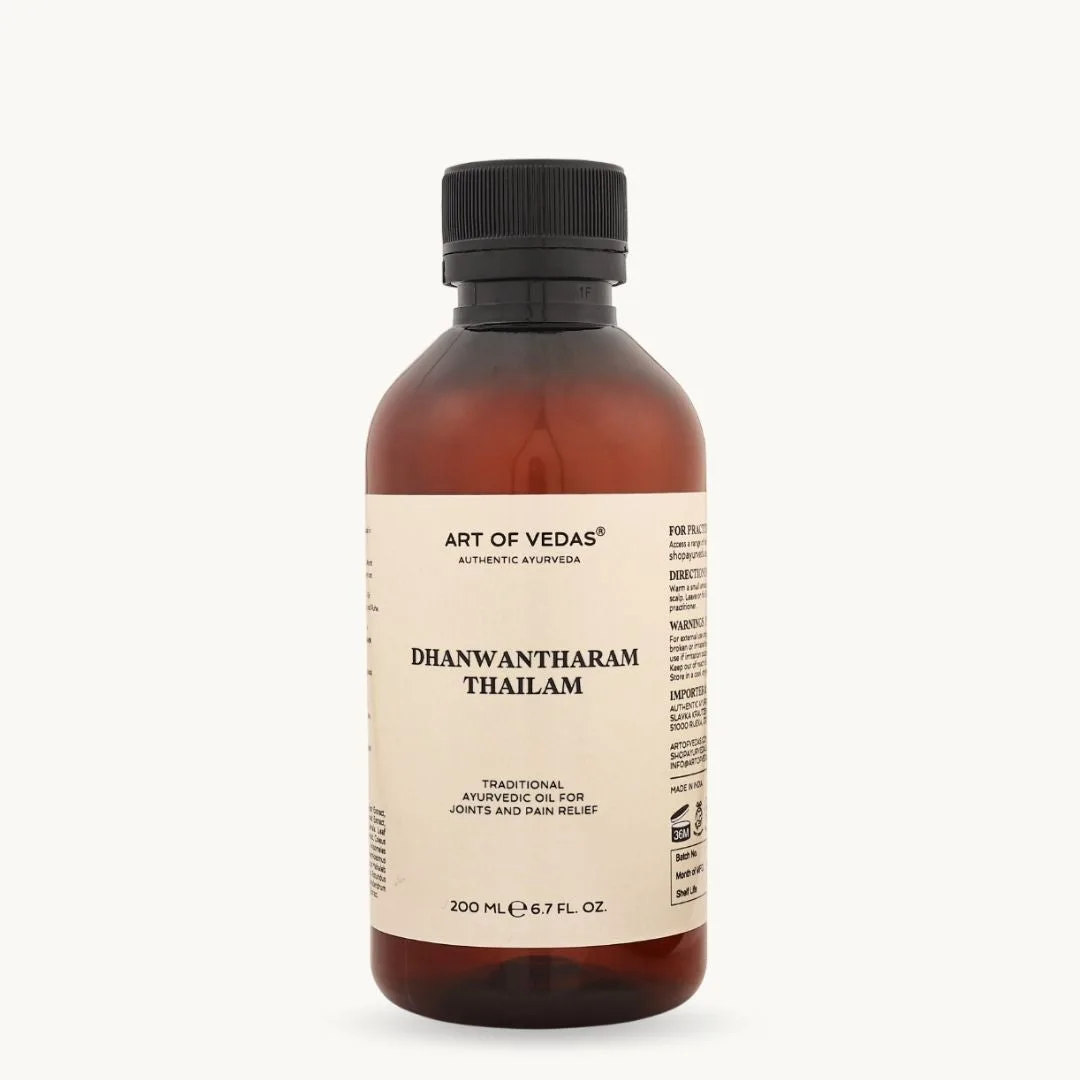
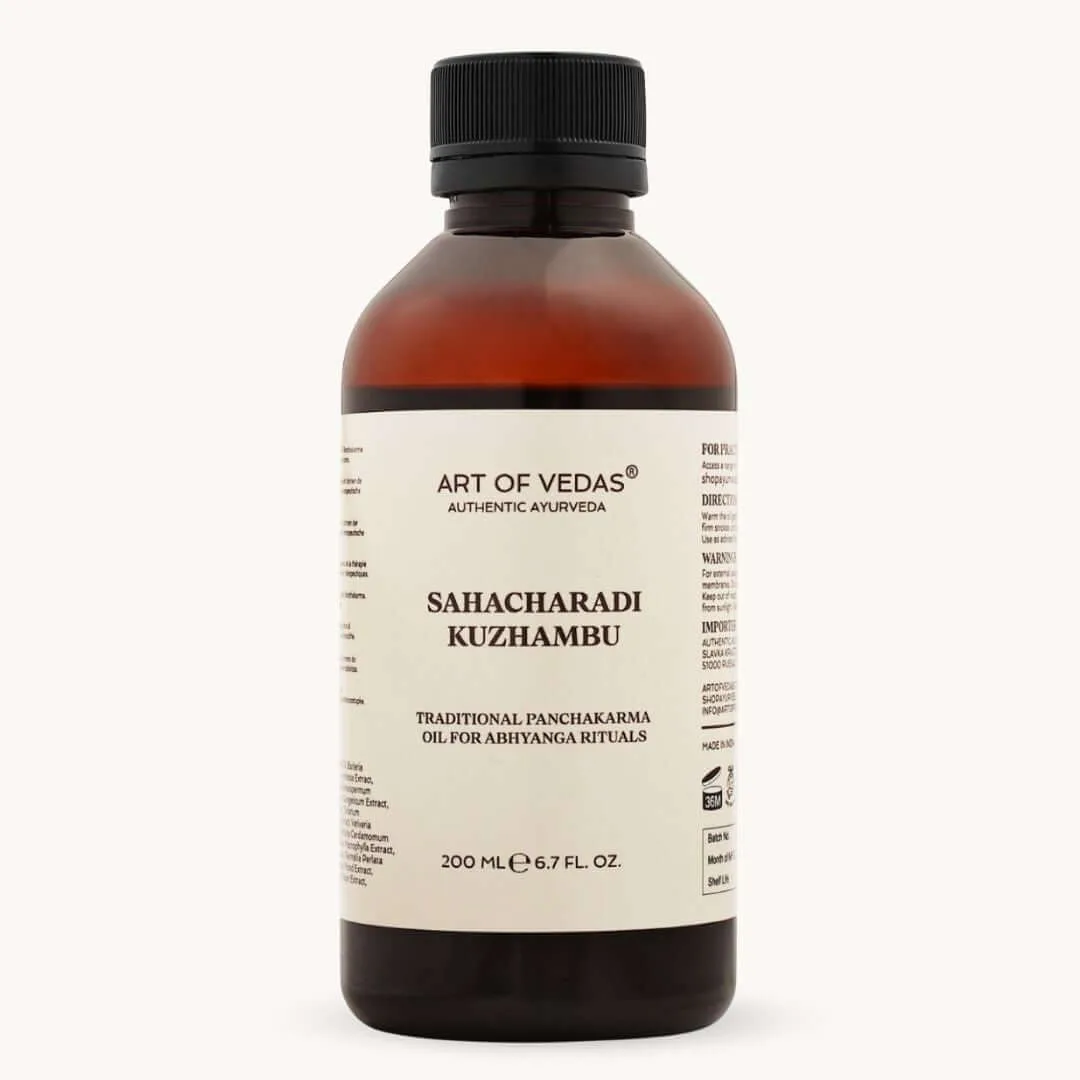
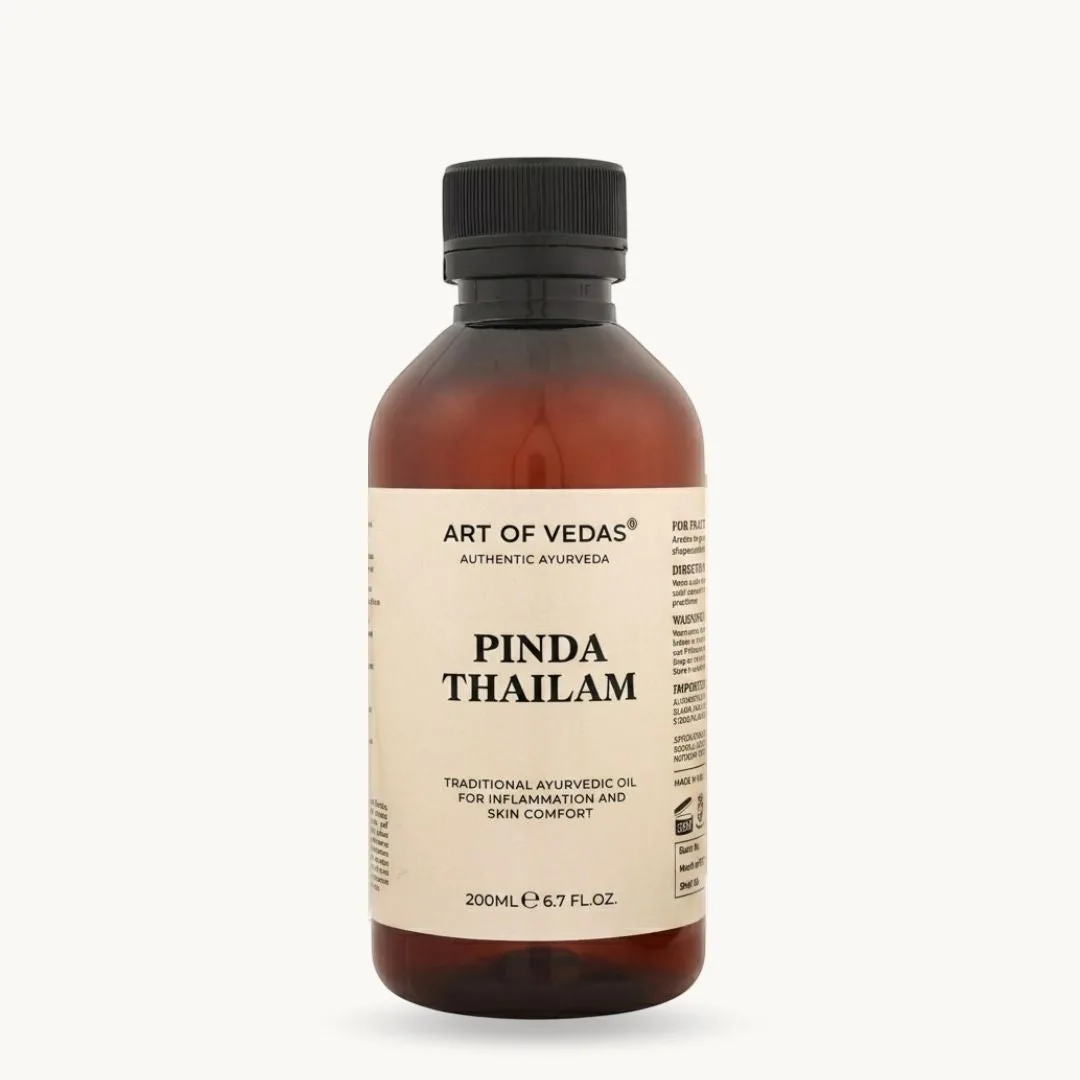
Fra le domande che arrivano più spesso ad Art of Vedas, quella sulla differenza fra Thailam e Kuzhambu merita una risposta precisa. Un Thailam è una preparazione liquida costruita su un solo olio, quasi sempre il sesamo. Un Kuzhambu è una preparazione semisolida costruita su tre grassi. Da questa sola distinzione discende tutto il resto: la consistenza, il comportamento sulla pelle e il compito che si affida a ciascun formato.
La risposta in breve
Thailam: liquido, base a olio unico, si distribuisce con facilità, adatto alle manualità lunghe e alle superfici ampie, il formato classico dell'Abhyanga su tutto il corpo. Kuzhambu: semisolido, base a tre grassi di sesamo, cocco e ricino, resta dove viene posato, si assorbe lentamente, il formato classico dell'applicazione locale mirata. Un Kuzhambu non è un olio e non va immaginato come un olio semplicemente più denso; è una preparazione diversa, con una finalità diversa.
Base e consistenza
Un Thailam classico parte da un solo olio, di norma sesamo spremuto a freddo, lavorato per ore con il Kashayam, il decotto erbale, e la Kalka, la pasta di erbe, finché il liquido non porta con sé il carattere dei vegetali. Il Kuzhambu nasce dallo stesso metodo paziente, ma su una base triplice: sesamo riscaldante, cocco rinfrescante e ricino denso e penetrante. Ridotta lentamente, questa composizione a tre grassi si assesta in un corpo morbido e semisolido, senza alcun agente addensante. La consistenza è la firma: il Thailam si versa, il Kuzhambu tiene.
Come si comportano sulla pelle
Versato in un palmo caldo, il Thailam si distribuisce subito e chiede di essere mosso: manualità lunghe e fluide su arti e schiena, quel ritmo su tutto il corpo che in Europa si incontra per primo. Il Kuzhambu si comporta diversamente. Ammorbidito fra le mani calde e applicato su una zona scelta, resta su quella zona e si rilascia gradualmente mentre viene assorbito. Il rilascio lento è precisamente il punto: si allunga il tempo di lavoro di un'applicazione mirata e nulla cola o si disperde lontano dalla regione a cui ci si sta dedicando.
Quando la tradizione preferisce l'uno o l'altro
Il criterio, in sostanza, è copertura contro concentrazione. Per l'Abhyanga quotidiana su tutto il corpo la tradizione ricorre al Thailam. Per un lavoro locale e prolungato su una regione precisa, le spalle dopo una settimana lunga, la zona lombare, le ginocchia, i piedi, ricorre invece al Kuzhambu. Molte routine combinano i due formati nella stessa seduta.
- Thailam per la copertura: Abhyanga su tutto il corpo e manualità lunghe
- Kuzhambu per la concentrazione: zone mirate e attenzione prolungata
- Il Thailam si assorbe e si esaurisce prima; il Kuzhambu resta e lavora lentamente
- Entrambi nascono dallo stesso metodo classico a decotto e pasta di erbe
- Entrambi traggono vantaggio da un lieve riscaldamento prima dell'uso
L'esempio del Dhanwantharam
L'illustrazione più limpida è l'unica formula che esiste in entrambi i formati. Il Dhanwantharam Thailam è la forma liquida della grande composizione per Vata a base di Bala; il Dhanwantharam Kuzhambu è la stessa ricetta classica portata sulla base a tre grassi e rifinita in forma semisolida. Stessa discendenza, corpi diversi, compiti diversi. Il classico per la parte bassa del corpo, il Sahacharadi Kuzhambu, mostra il formato nella sua espressione più tipica. Per il quadro completo della categoria conviene partire dalla nostra guida completa al Kuzhambu; per il versante liquido, dalla guida al significato di Thailam; e per la terza consistenza della famiglia il confronto prosegue in Thailam, Kuzhambu o Mezhukupakam.
Domande frequenti
Il Kuzhambu è semplicemente un olio più denso?
No. È una preparazione semisolida su base a tre grassi. La consistenza è intrinseca alla ricetta e alla riduzione, non una densità aggiunta.
La stessa formula può esistere sia come Thailam sia come Kuzhambu?
Sì. Il Dhanwantharam è l'esempio più noto, preparato secondo tradizione in entrambe le forme, liquida e semisolida.
Quale dei due si assorbe più rapidamente?
Il Thailam. Il Kuzhambu è volutamente più lento: resta sulla zona di applicazione e si rilascia in un tempo più lungo.
Quale scegliere per l'Abhyanga su tutto il corpo?
Un Thailam. La tradizione riserva il Kuzhambu all'applicazione locale mirata, non al massaggio integrale.
I due formati impiegano le stesse erbe?
Quando condividono il nome della formula, sì: la ricetta viaggia da un formato all'altro. La differenza sta nei grassi di base e nella consistenza finale.
Questo articolo descrive pratiche ayurvediche tradizionali per uso esterno e ha finalità puramente informative. Non costituisce un parere medico. Si raccomanda di consultare un professionista ayurvedico qualificato o il proprio medico prima di intraprendere una nuova routine e di eseguire un test su una piccola area di pelle prima del primo utilizzo.