Long before recovery became a category of its own, Ayurveda had a settled answer to physical effort: warmth, rest and unhurried massage. In classical that answer often takes the form of a Kuzhambu, a semi-solid herbal preparation that is worked slowly into the muscle groups that did the day's work. For runners, cyclists, climbers and anyone who trains, the format has a very practical appeal: it stays exactly where you put it, absorbs gradually and turns the half hour after a shower into a deliberate post-exertion ritual rather than an afterthought.
Why the semi-solid format suits worked muscles
A Kuzhambu is not an oil. It is cooked on a base of three fats, traditionally sesame, coconut and castor, together with herbal decoctions and pastes, until it sets to a soft, dense consistency. Warmed gently, it spreads under the hands and then remains in a thin layer on the applied area. That behaviour matches the post-exercise situation precisely: you are not covering the whole body, you are attending to calves after a run, thighs after a ride, shoulders after a session at the wall. The preparation keeps the botanicals in contact with those regions for twenty minutes or more, while you rest. The general method of warming and applying is described in our guide on how to warm and apply a Kuzhambu.
What the tradition values in this ritual
Framed in its own terms, the post-exertion Kuzhambu ritual is valued as:
- A traditional way to give warmth and attention to muscles that feel thoroughly used
- A deliberate pause between physical effort and the rest of the evening
- Focused, local care for the specific regions that carried the training load
- Part of a Vata-settling routine after intense movement and stimulation
- Rich, nourishing care for skin exposed to weather, sweat and repeated showers
Nothing here is a performance promise. It is a ritual of care, and its worth shows in how the evening feels rather than in numbers.
A simple post-training sequence
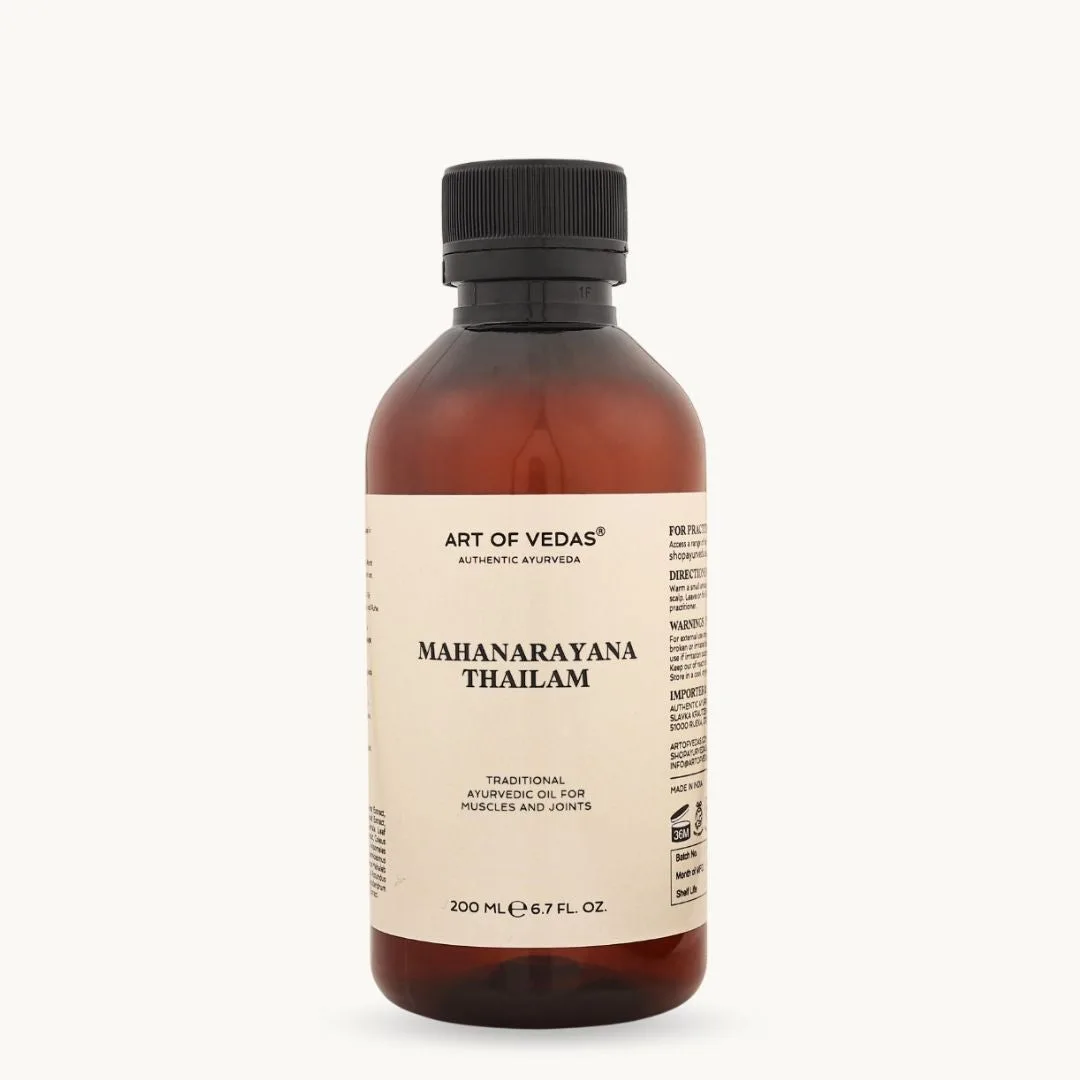
Shower first and dry off well; the ritual belongs after the wash, not before it. Warm the closed jar in a bowl of hot water while you dress. Then take a teaspoon of the preparation for each region you intend to work on and apply it with slow, firm strokes along the direction of the muscle: long lines up the calves and thighs, broad circles over the shoulders. Sit or lie comfortably for twenty to thirty minutes, keeping the area warm and out of draughts. Finish by wiping any residue with a warm, damp towel. On heavy training days, many people pair this local work with a fuller routine; our guide to Abhyanga with Mahanarayana Thailam describes the flowing full-body counterpart.
Choosing the formula
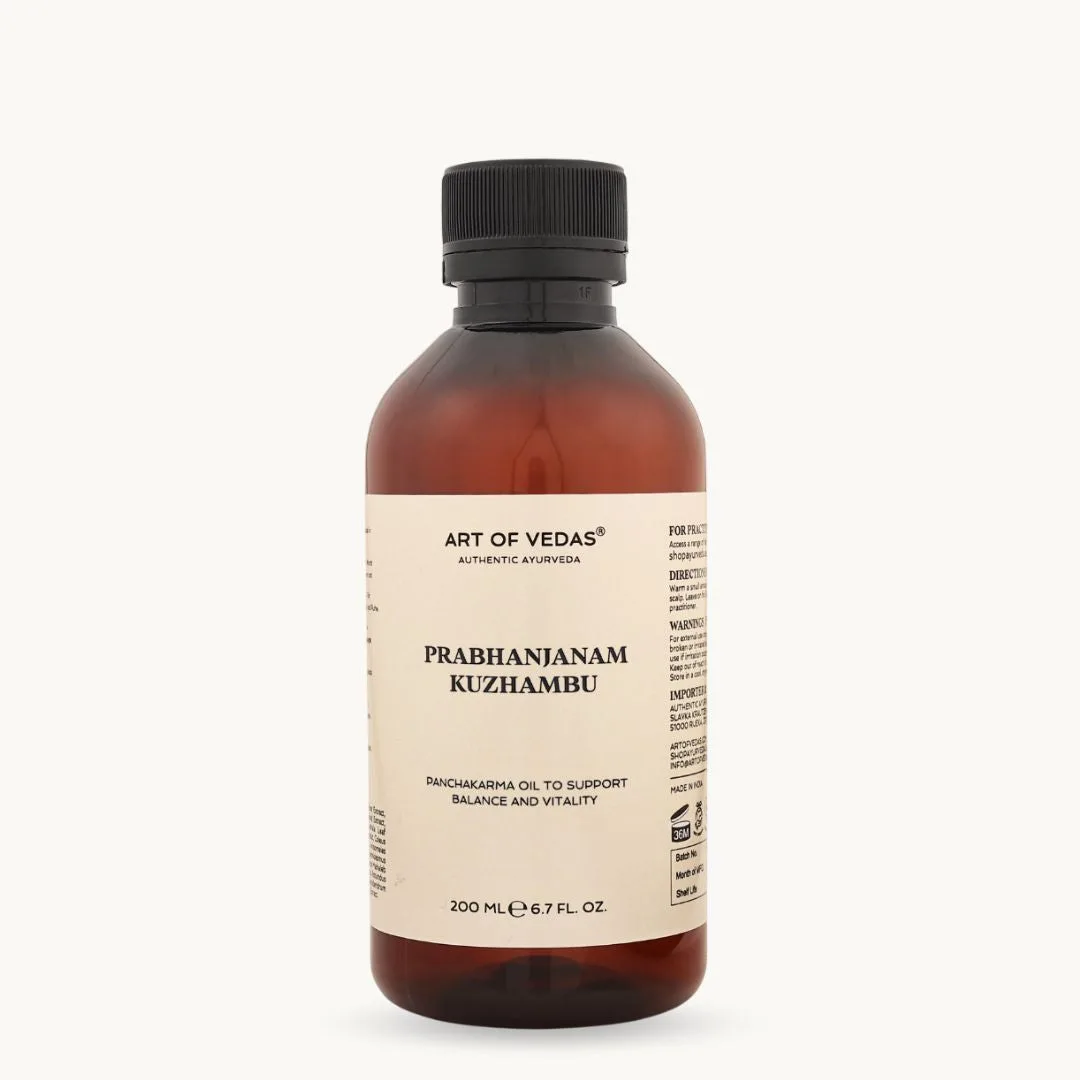
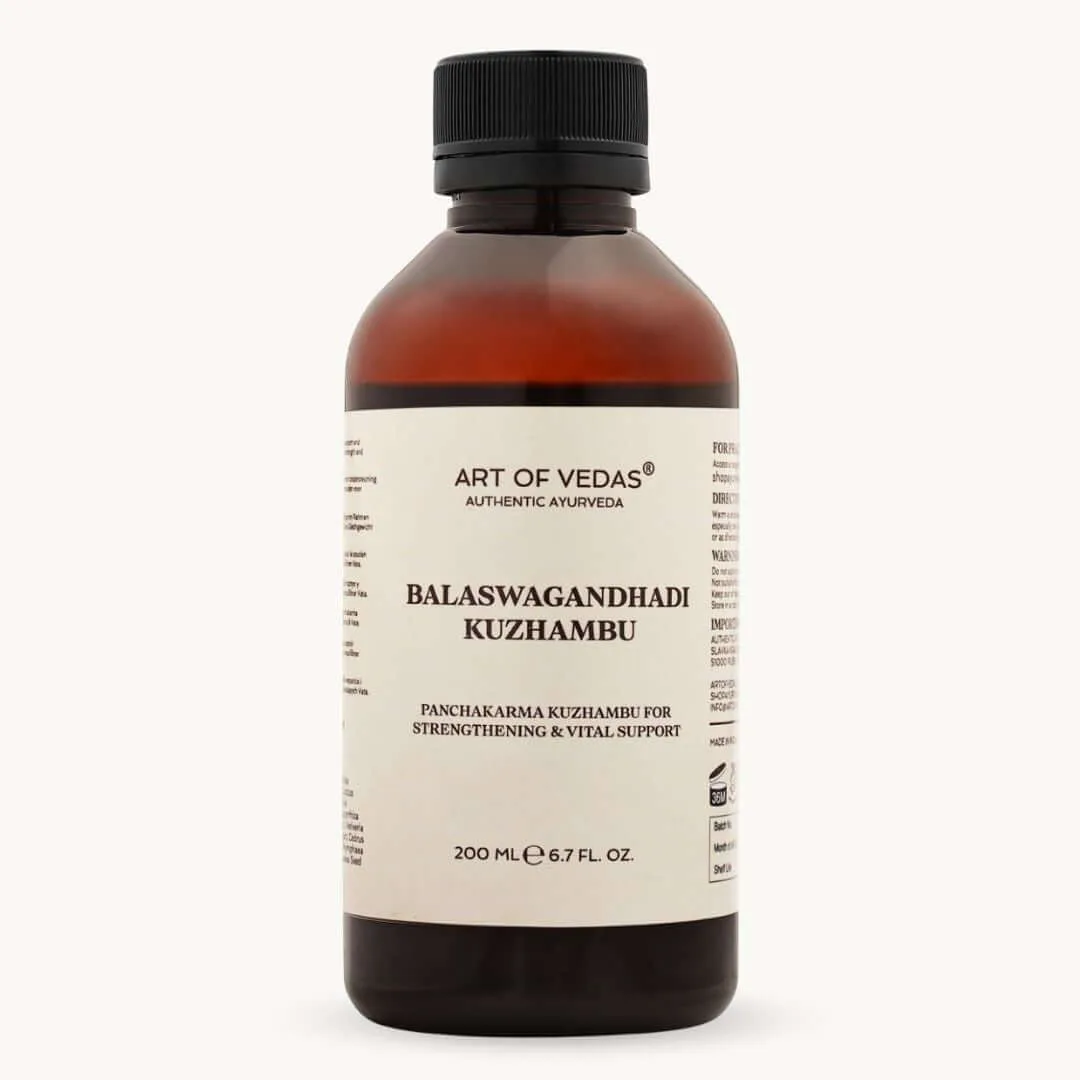
Two house formulas suit this ritual particularly well. Prabhanjanam Kuzhambu belongs to the Vata-care tradition, prepared around warming classical botanicals, and is the natural choice for shoulders, neck and back after effort. Balaaswagandhadi Kuzhambu is built on Bala, Sida cordifolia, and Ashwagandha, Withania somnifera, the classical strength pairing, and leans towards legs and arms after training. In both cases the botanicals are prepared as decoction and paste and cooked patiently into the three-fat base; the full background of the second formula is set out in our complete guide to Balaaswagandhadi Kuzhambu.
Frequently Asked Questions
Should I apply the Kuzhambu before or after training?
After, once you have showered and the skin is clean and warm. The ritual is a closing gesture for the session, not a preparation for it.
How soon after exercise can I begin?
Whenever you have showered and your breathing has settled. There is no traditional waiting period beyond that; most people begin within the hour.
Can I use it on rest days?
Yes. Many people keep the same evening ritual on rest days, often with a smaller quantity, simply because it marks the end of the day well.
Which areas benefit most from the format?
The regions that did the work: calves, thighs, shoulders and forearms. For full-body coverage a flowing Thailam is the more practical texture.
Does the preparation need to be washed off afterwards?
Wipe the residue with a warm, damp towel after twenty to thirty minutes. A full second shower is optional; many simply wipe and dress.
This article describes traditional Ayurvedic practice for general information and personal care. It is not medical advice. If you are pregnant, have a health concern or know your skin reacts easily, please speak with a qualified professional before beginning a new routine.