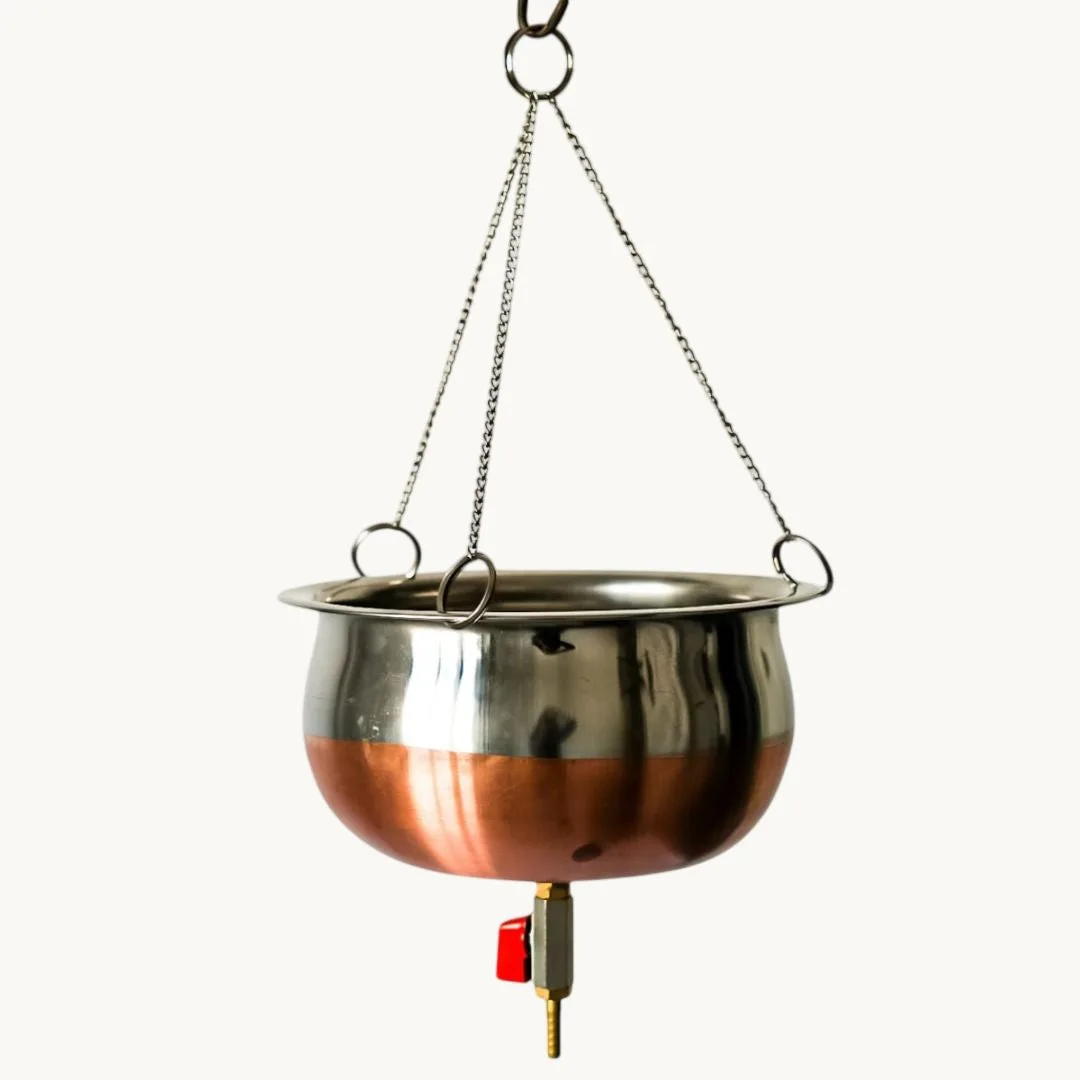
Every practitioner furnishing a Shirodhara setup meets the same question sooner or later: brass or stainless steel for the pot? One carries the weight of tradition, the other the convenience of a modern cleaning cycle. Both pour a perfectly good stream. This comparison from Art of Vedas lays out the real differences so the decision can rest on how the pot will actually be used, not on appearance alone.
Before the metals divide, it helps to name what any good Shirodhara pot must deliver:
- A fine, unbroken stream from a well-made outlet, the single quality the practice cannot do without.
- Enough capacity that a session does not pause for refilling.
- A shape that hangs securely from a standard stand at the right height.
- A surface that cleans back to neutral after every oily session.
The Case for Brass
Brass is the traditional face of Shirodhara equipment. It belongs to the same family of copper alloys that Indian metalware has worked for centuries, a family we describe in our guide to Kansa and the metals of Ayurveda. A brass Shirodhara pot has satisfying weight, a warm golden colour and the unmistakable presence of classical equipment; in a practice room built around tradition, guests notice it before anything else. Brass also develops character. With use and washing it slowly darkens and gains a patina, which many owners consider part of the vessel's life and others prefer to polish away. That choice, and the few minutes of polishing it implies, comes with the metal.
The Case for Stainless Steel
Stainless steel is the workhorse answer. A stainless steel Shirodhara pot does not stain, does not develop patina and does not mind detergent, hot water or a fast turnaround between guests. For a practice running several sessions a day, that cleaning cycle is the decisive argument: oil residues lift off quickly and the pot looks identical after every wash. Steel is also typically lighter to handle when filling and hanging, and its neutral surface never asks for polishing. What it lacks is precisely what brass has: warmth, weight and the traditional register.
Side by Side: What Actually Differs
Functionally, the stream matters more than the metal, and both materials pour equally well when the outlet is well made. The genuine differences sit elsewhere. Appearance: warm gold against cool silver. Maintenance: occasional polishing against simple washing. Ageing: a developing patina against an unchanging surface. Weight: reassuring heft against easy handling. Cost of ownership over the years is similar; both are durable metals that outlast fashions when dried properly after washing and stored with a little care.
Our Honest Verdict by Use Frequency
For a busy professional room with several guests a day, stainless steel earns its place through the wash cycle alone, and nothing about it compromises the practice itself. For a tradition-forward studio that regards the equipment as part of the setting, and accepts a polishing ritual, brass is the natural choice and ages beautifully. For home use and occasional sessions, where the pot is washed at leisure and often displayed between uses, brass tends to give more pleasure. Many established practices simply keep one of each. Whichever metal you choose, the surrounding setup is the same, and our Shirodhara pot and equipment guide covers stands, tables, oil quantities and warming in full, while our complete Shirodhara guide covers the practice itself.
Frequently Asked Questions
Does brass affect the oil?
Not in the course of a session. Warm oil passes through the pot briefly. Wash the vessel promptly after use rather than leaving oil standing in it overnight, a habit that serves steel equally well.
Is stainless steel less authentic?
The stream, the height and the warmth of the oil define the practice, not the metal above it. Steel is a modern material, and it performs the classical task faithfully.
Which pot is easier to clean?
Stainless steel, without question. Warm water and ordinary washing-up liquid restore it completely. Brass cleans just as surely but rewards an occasional polish with lemon and salt to keep its shine.
Do both fit the same stands?
Generally yes. Both are hung by the neck or handle from standard Shirodhara stands; check the pot's capacity and hanging arrangement against your stand before ordering.
Which one lasts longer?
Both outlast their owners' patience for the question. Dried after washing and stored dry, each metal serves for many years; brass simply shows its age in colour while steel does not.
For external use only. Not a substitute for professional medical advice.